Early Life in Alabama
Annie Jean Easley was born on April 23, 1933, in Birmingham, Alabama, during an era of strict racial segregation in the United States. Growing up in the Deep South, opportunities for young African-American girls were extremely limited. But Annie’s mother, Mary Melvina Hoover, instilled in her a belief that hard work and education could overcome any obstacle. She often reminded Annie, “You can be anything you want to be, but you have to work at it.”
Annie showed an early love for mathematics and reading. She attended a local parochial school where she excelled in science and math, often ranking at the top of her class. Her teachers quickly noticed her curiosity and sharp mind, encouraging her to pursue higher education — something rare for young Black women at the time.
Education and Early Ambitions
After high school, Annie attended Xavier University in New Orleans, a historically Black Catholic university, where she studied pharmacy. However, life soon took an unexpected turn. After two years, she married and relocated with her husband to Cleveland, Ohio.
When she arrived in Cleveland, she discovered that the local university no longer offered a pharmacy program. Undeterred, she began exploring new career options — and one newspaper article would change her life forever.
The Turning Point: Joining NACA
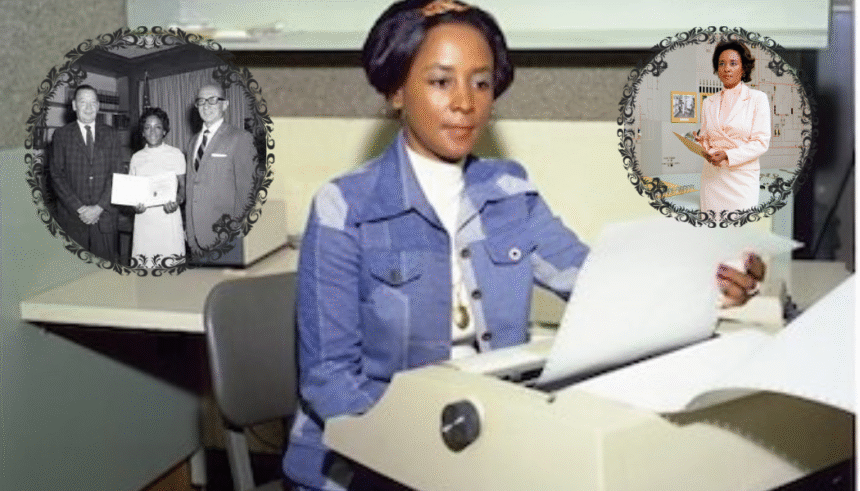
In 1955, Annie read a short article about twin sisters who worked as “human computers” at the National Advisory Committee for Aeronautics (NACA), which later became NASA. The article fascinated her. With her background in math and her analytical mind, she decided to apply.
Two weeks later, Annie Easley was hired at the Lewis Research Center (now NASA’s Glenn Research Center) in Cleveland. She was one of only four African-American employees in the entire facility. In a time when both racial and gender discrimination were common, her presence itself was groundbreaking.
Annie began as a human computer, performing complex mathematical calculations by hand for engineers. Before electronic computers existed, these calculations helped determine flight paths, fuel mixtures, and rocket efficiency. Her accuracy and speed quickly set her apart.
Transition to Computer Programming
As technology evolved, so did Annie. When NASA transitioned to digital computing, she taught herself new programming languages like FORTRAN and SOAP (Symbolic Optimal Assembly Program). She became one of NASA’s earliest computer programmers, writing code to model rocket engines and propulsion systems.
Her adaptability was remarkable — moving from manual calculations to early coding when programming was still considered an obscure and technical field. Colleagues often praised her calm focus and her ability to solve difficult problems efficiently.
Major Contributions at NASA
Annie Easley’s work was instrumental in several of NASA’s major projects, especially the Centaur Rocket Project. The Centaur upper-stage rocket was a pioneering technology that used liquid hydrogen and liquid oxygen as fuel — a combination that allowed rockets to reach greater distances and carry heavier payloads.
She helped write and test the computer code that analyzed rocket performance and fuel efficiency. The Centaur program later became critical in launching major space missions like Voyager, Cassini, and Galileo.
Beyond rockets, Annie also worked on energy conversion systems, solar energy, and battery technologies, including early research that contributed to modern hybrid vehicle batteries. Her curiosity extended far beyond aerospace — she wanted to understand how technology could improve life on Earth as well as in space.
Breaking Barriers and Overcoming Challenges
While Annie was breaking new ground technically, she was also facing the social realities of her time. As a Black woman in a predominantly white, male environment, she often encountered discrimination. She recalled instances when her photo was removed from NASA publications or when she was passed over for advancement despite her qualifications.
Yet, she never allowed bitterness to define her. “I didn’t get discouraged,” she said. “If I couldn’t work with you, I’d work around you.” Her quiet resilience earned her the respect of peers who valued her professionalism and dedication.
Advocate and Mentor
Outside of her technical work, Annie became an active advocate for equality within NASA. She served as an Equal Employment Opportunity (EEO) counselor, helping others navigate workplace challenges and encouraging women and minorities to pursue STEM careers.
She also visited schools and community groups, sharing her story and motivating young students — especially girls — to explore careers in science and engineering. Annie believed that representation mattered: that when children saw someone who looked like them succeed, it opened doors of possibility.
Personal Life and Traits
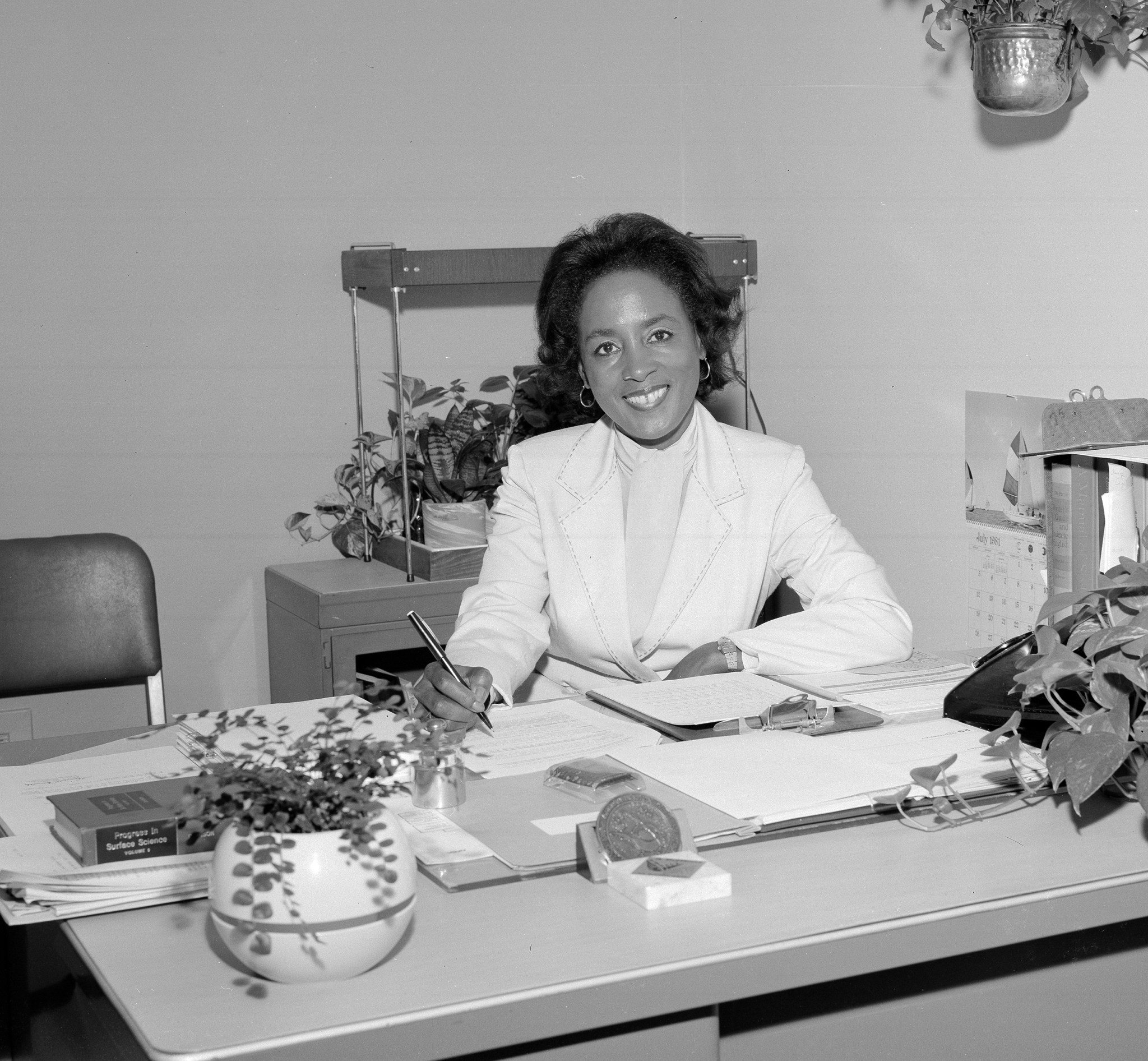
Annie Easley was known not just for her intellect but also for her warmth and discipline. Standing around 5 feet 5 inches tall, she carried herself with quiet confidence. She had dark brown eyes, short black hair, and a professional, polished style.
She was deeply private about her personal life. Records show she was married, though details about her husband and children remain limited. Those who knew her described her as kind, meticulous, and humble — someone who believed in doing the work for the sake of purpose, not recognition.
Education and Later Years
While working full-time at NASA, Annie returned to school and earned her Bachelor’s degree in Mathematics from Cleveland State University in 1977. Balancing education, full-time work, and advocacy was no small feat, but she managed it with grace.
She continued to work at NASA for 34 years, retiring in 1989. Even after retirement, she remained active in her community, volunteering and mentoring students in Cleveland. She passed away on June 25, 2011, at the age of 78, leaving behind a legacy of brilliance, courage, and compassion.
Net Worth and Social Media Presence
There are no official records of Annie Easley’s net worth, as her career was in government service, not private industry. Modern estimates suggest her adjusted earnings would be equivalent to $60,000–$90,000 per year in today’s terms. She lived modestly, focusing more on learning and giving back than on wealth.
She passed away before the rise of social media platforms like Twitter or Instagram, so she had no personal social media presence. However, NASA and educational organizations continue to honor her online, ensuring her story reaches new generations.
Legacy and Recognition
Today, Annie Easley is celebrated as one of NASA’s “hidden figures” — a woman whose work laid the foundation for space exploration as we know it. Her programming and problem-solving skills were integral to the success of missions that expanded human knowledge of the universe.
In recognition of her contributions, NASA and several educational institutions have included her in their STEM trailblazer honors. Her life has been featured in exhibitions, documentaries, and history projects focusing on the contributions of women and African Americans in science.
A Lasting Inspiration
Annie Easley’s journey from Alabama to NASA is more than a career story — it’s a story of perseverance, intellect, and faith in oneself. She once said, “I’m not one to dwell on things, but I do remember those early days, and I’m proud of how far we’ve come.”
Buzzlift: Jennifer Griffin’s Career Timeline — From War Zones to Washington
Her story continues to inspire countless students and professionals today. Annie proved that even in the face of systemic barriers, excellence and determination can launch you — quite literally — beyond the sky.