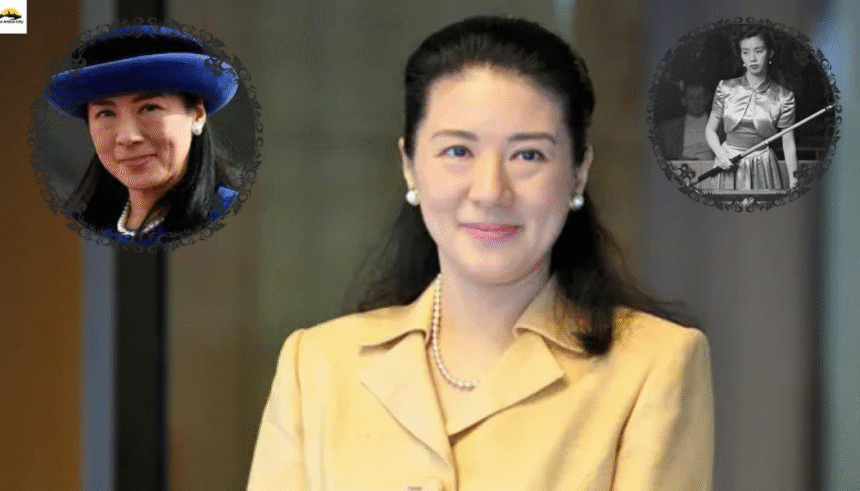
Masako Katsura, often remembered as “The First Lady of Billiards,” was a woman who reshaped perceptions in a world dominated by men. Born on March 7, 1913, in Tokyo, Japan, she rose to international fame as the first woman to compete in world-class three-cushion billiards, a highly technical and demanding cue sport. Her journey was not simply about winning matches; it was about breaking barriers, earning respect, and inspiring generations of women athletes who followed after her.
At a time when sports culture was restrictive for women, Katsura entered billiard halls filled almost entirely with male competitors and took her place among them with calm confidence. Her ability to combine grace, precision, strategic thinking, and emotional discipline made her unforgettable—not just as a skilled player, but as a symbol of courage and excellence.
Early Beginnings
Masako Katsura did not come from a family known for sports. Her father passed away when she was still a young girl, and her mother encouraged her to spend time with her older sister. Her brother-in-law owned a billiard parlor, and this environment introduced her to the sport. She was drawn in instantly—not out of leisure, but curiosity. Many players noticed early that she had a natural eye for ball control and angles.
At 12 years old, when most children played games casually, Katsura was studying geometry on the table, watching how balls reacted to the cloth surface and cushion rebounds. The billiard hall became her classroom, her sanctuary, and her training ground.
The Guiding Mentor

Katsura became a student of Kinrey Matsuyama, one of Japan’s most accomplished three-cushion billiards players. Under his guidance, she moved from casual talent to serious competitor. Matsuyama recognized not only her potential but her discipline, something many professional players struggle to maintain.
She practiced daily for long hours, sharpening her touch and developing what later became her signature style—a soft, controlled stroke instead of the powerful shots many players used. She treated billiards as both a mental puzzle and a performance requiring calmness and clarity.
Breaking Barriers
During the 1930s and 1940s, billiards in Japan was almost exclusively a men’s sport. For a woman to appear in a billiard hall was rare, but to compete seriously against men was almost unheard of. Yet Katsura did exactly that—and she won.
Her victories in Japanese tournaments became known across the country. She wasn’t seen merely as a “good woman player.” She was seen as a good player, equal in talent and understanding of the sport.
This distinction is important. Her success was not a novelty. It was excellence.
A New Life in the United States
In 1947, Katsura married Vernon Greenleaf, a Master Sergeant in the U.S. Army. The couple moved to San Francisco in 1951, a transition that opened the door for her to showcase her talents globally. In the United States, billiards was widely followed, and many of the greatest players competed in national and world tournaments regularly.
When Katsura entered the scene, audiences were surprised. They did not expect a woman to stand among world champions—yet she did. And she did it with quiet confidence and high skill, earning respect almost immediately.
Making History on the World Stage
In 1952, Masako Katsura became the first woman to compete in the World Three-Cushion Billiards Championship, held in San Francisco. Three-cushion billiards is a sport that demands not only technical accuracy but deep understanding of angle play. Every shot requires the cue ball to hit the object ball and then make contact with at least three cushions before scoring.
Katsura not only played—she ranked among the top competitors, at times finishing just behind established male champions like Willie Hoppe, the legendary billiards figure who openly admired her skill.
She went on exhibition tours across the United States and Europe, performing trick shots, competing with world champions, and showing the sport to audiences who had never seen someone with such elegance at the billiard table.
Style and Skill
Masako Katsura was known for:
- Soft, precise cue stroke
- Unshakable calmness under pressure
- Calculated and thoughtful shot planning
- Graceful presence at the table
Her approach was analytical rather than forceful. She believed billiards was a game of patience, geometry, and intuition. She used subtle movements rather than dramatic force, and this made her performances feel almost artistic.
Personality and Lifestyle
Despite international attention, Katsura remained humble. She was known to be soft-spoken, disciplined, and respectful to others. She never approached the sport with arrogance or aggression. Instead, she carried herself with composure and dignity, which became a part of her image and legacy.
She preferred quiet routines—training, mental focus, physical conditioning, and rest. Her life centered around improving craft rather than fame.
Physical Appearance
- Height: Approximately 5 feet 2 inches (157 cm)
- Weight: Around 50–55 kg (110–121 lbs) in her prime years
- Hair: Dark
- Presence: Elegant, calm, poised, always neat in presentation
Her appearance contributed to the contrast between her refined demeanor and the tough environment of billiard halls, which made her unforgettable to audiences.
Family and Personal Life
- Spouse: Vernon Greenleaf (married 1947, passed 1967)
- Children: No widely documented children
- Siblings: Several, including an older sister who supported her early development
- Later Years: Returned to Japan after her husband’s death and lived quietly
Net Worth and Financial Life
During Katsura’s era, sports salaries were not high, and billiards players earned mostly from exhibitions, not big tournament prizes. She lived comfortably but modestly.
Estimated historical net worth: $100,000–$300,000 (in the context of her lifetime economy)
Her true wealth is her legacy, influence, and place in sports history.
Social Media
Masako Katsura lived long before social media existed. She has no official social media accounts. However, many tribute pages and billiards history communities share her photos, videos, and match archives today.
Legacy
Masako Katsura remains a global icon because she did something more impactful than winning titles—she opened doors. She proved that talent does not belong to one gender. She demonstrated that skill, patience, character, and determination could redefine expectations.
Her influence endures in:
- Female athletes who break barriers today
- Billiards training philosophies
- The way the sport is remembered historically
She changed the game—and the world around it.
Conclusion
Masako Katsura is remembered not just as a champion, but as a pioneer. Her story is one of courage, dedication, and quiet strength. She stood against expectations, mastered her craft, and earned respect through genuine ability. Her legacy continues to inspire, reminding us that the boundaries society sets can always be challenged.
Her life teaches us that excellence speaks for itself—and history remembers those who dare to step forward when others hesitate.