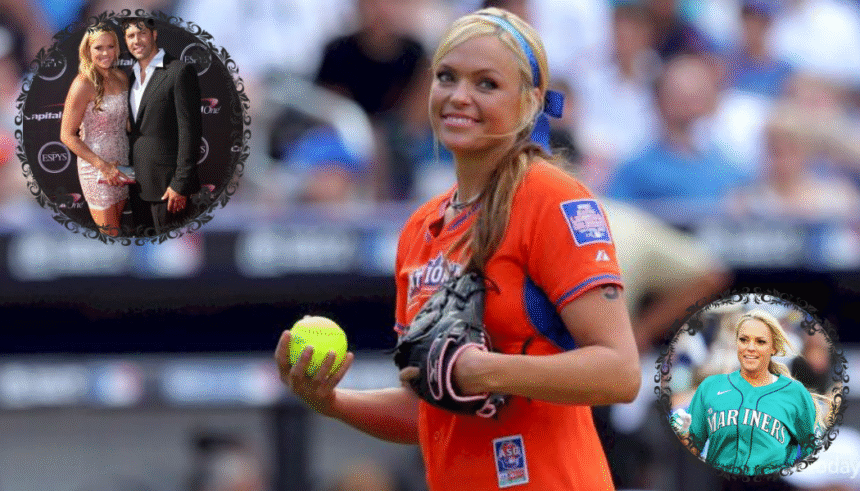
Early Life and Roots
Born on September 3, 1980, in La Mirada, California, Jennie Lynn Finch grew up as the youngest of three children in a supportive, sports-loving family. Her father, Doug Finch, spent countless hours helping her refine her pitching skills in their backyard, often catching for her and building her confidence as an athlete. By age five, Jennie was already playing T-ball and displaying a natural athletic instinct that set her apart from other children.
Standing at around 6 feet 1 inch (185 cm) tall, Jennie’s height and athletic build became trademarks of her powerful presence both on and off the field. Her combination of strength, coordination, and determination would soon make her one of the most dominant figures in women’s softball.
High School Days and Emerging Talent
Jennie attended La Mirada High School, where she didn’t limit herself to softball alone. She excelled in multiple sports, including basketball and volleyball, serving as captain of all three teams in her senior year. Her athletic versatility and leadership skills stood out, and she quickly became a local sports hero.
Even as a teenager, she showed remarkable promise as a pitcher. At age 12, she led her team to a national championship in the Amateur Softball Association (ASA), and by 14, she had already captured another national title. These early experiences taught her discipline, teamwork, and how to handle pressure — skills that would define her professional career later on.
Collegiate Career at the University of Arizona
When it came time for college, Jennie accepted an athletic scholarship to the University of Arizona, one of the top softball programs in the nation. From 1999 to 2002, she wore the Wildcats uniform with pride and completely dominated collegiate softball.
In 2001, Jennie recorded a perfect 32–0 season, one of the most impressive feats in NCAA history. She also led the Wildcats to a National Championship, earning the Honda Sports Award as the nation’s top softball player. During her career, she set an incredible NCAA record with 60 consecutive wins, a streak that remains legendary in the sport.
Jennie’s impact extended beyond her statistics. Her calm composure on the mound, her leadership, and her competitive drive made her a role model for teammates and opponents alike. When her college jersey number 27 was retired, it cemented her legacy as one of the greatest athletes to ever represent the University of Arizona.
Olympic Success and Global Recognition
After college, Jennie’s career reached new heights on the international stage. She joined Team USA Softball, competing in the 2004 Athens Olympics, where she helped her team secure a Gold Medal. Four years later, she played an equally important role at the 2008 Beijing Olympics, where Team USA took home the Silver Medal.
Her Olympic performances brought her global recognition. Jennie became one of the most recognizable faces in women’s sports, admired for her athleticism, humility, and character. She wasn’t just a softball player — she became an ambassador for women’s sports around the world, inspiring countless young girls to pursue their athletic dreams.
Professional League Career and Media Presence
Jennie continued her career in the National Pro Fastpitch (NPF) league, playing for the Chicago Bandits from 2005 until her retirement in 2010. As a professional, she remained a dominant pitcher, often drawing record crowds to NPF games and helping to elevate the visibility of women’s softball. In one season, she achieved an incredible 0.80 ERA and struck out more than a batter per inning, maintaining her reputation as one of the game’s most feared competitors.
Her combination of beauty, strength, and poise soon caught the attention of the media. Jennie was featured in People Magazine’s “50 Most Beautiful People” and appeared on various television programs, including Celebrity Apprentice, Dancing with the Stars, and numerous sports broadcasts. Through these appearances, she helped bring softball to audiences who had never followed the sport before.
Personal Life and Family

Off the field, Jennie Finch is as admired for her role as a wife, mother, and mentor as she is for her athletic success. She married Casey Daigle, a former Major League Baseball pitcher, on January 15, 2005. The couple shares three children — Ace Shane, Diesel Dean, and Paisley Faye — and often emphasize the importance of faith, family, and gratitude in their lives.
Jennie has been open about her Christian faith, which she says has guided her both during her playing days and in her personal life. After retiring from professional play, she focused on motherhood while continuing to coach, speak, and inspire young athletes through her Jennie Finch Softball Academy and youth clinics across the United States.
Physical Profile and Public Image
Jennie’s striking physical appearance—her tall, athletic frame, bright smile, and calm demeanor—became part of her brand. Standing 6′1″ tall and weighing around 174 lbs (79 kg), she embodied the modern ideal of a strong and confident female athlete. Her signature blonde hair and confident posture made her instantly recognizable on and off the field.
Her positive and approachable image helped break stereotypes about female athletes. She demonstrated that athletic excellence and femininity could coexist, paving the way for a new generation of women to embrace their power without compromise.
Net Worth and Career Earnings
As of recent estimates, Jennie Finch’s net worth is around $2 million. Her income comes from a combination of her professional softball career, Olympic bonuses, endorsement deals, media appearances, and her softball academy.
She has endorsed major brands like Mizuno, where she released her own line of signature gloves and bats, as well as partnerships with companies like Sprint and Bank of America. While her earnings were not comparable to those of male athletes in major sports, her financial success reflects the growing recognition and respect for women in athletics.
Social Media and Advocacy
Jennie remains active on social media, particularly on Instagram, Twitter, and Facebook, where she connects with fans, shares updates from her camps, and promotes women’s sports. Her online presence reflects her authenticity — she often posts about family life, faith, and empowering young athletes.
She also continues to advocate for equality and growth in women’s sports, often speaking at events and mentoring up-and-coming athletes. Her approachability and dedication to community work have helped her remain relevant long after her retirement from competitive play.
Legacy and Lasting Impact
Jennie Finch’s impact reaches far beyond her statistics or awards. She changed how the world sees softball — not as a niche sport, but as a powerful stage for women’s athletic achievement. Her humility, combined with her fierce competitiveness, made her a role model to millions.
Today, Jennie remains a symbol of excellence and integrity. Her work through softball camps and motivational speaking continues to inspire girls to believe that with hard work, faith, and persistence, anything is possible. Her 60-game winning streak at Arizona, her Olympic medals, and her dedication to the sport stand as testaments to her greatness.
Conclusion
Jennie Finch’s story is one of perseverance, talent, and heart. From a young girl playing backyard softball to an international icon, her journey represents everything inspiring about sports. She broke records, shattered stereotypes, and became one of the most respected figures in women’s athletics.
Today, she remains an advocate, mentor, and mother who continues to influence young athletes everywhere. Her legacy isn’t just about what she achieved — it’s about who she became in the process: a legend who proved that grace, grit, and determination can change the game forever.