The Rising Challenge of License Management
In today’s digital workplaces, software runs everything — from email servers to analytics dashboards. Yet, managing licenses for all that software is a task many organizations underestimate. Every subscription, application, or library comes with its own license type and terms. As a result, compliance becomes a maze of contracts, renewals, and regulations that are hard to track.
When license management fails, the consequences can be serious. Organizations face financial waste from unused software and legal risk from non-compliance. That’s why many businesses and public agencies are turning to smarter tools to regain control — tools like the Doge Software Licenses Audit HUD.
What Exactly Is the Doge Software Licenses Audit HUD?
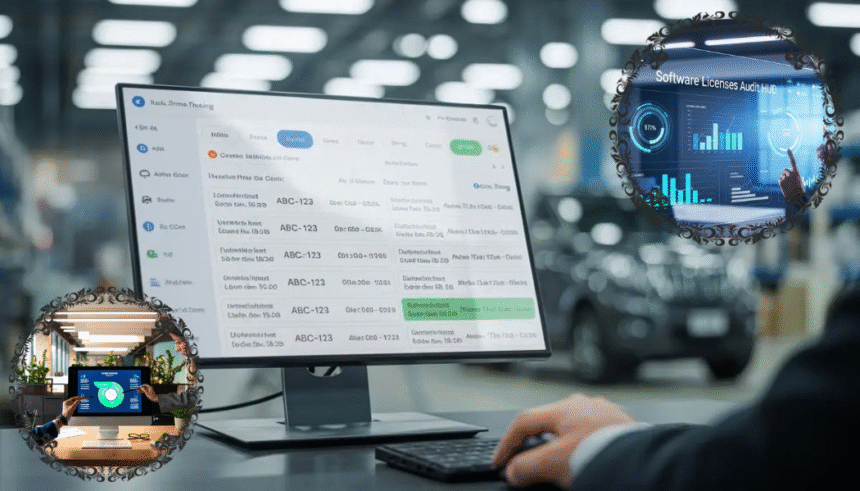
The term HUD stands for “Heads-Up Display.” It means real-time, on-screen visibility of critical information. The Doge Software Licenses Audit HUD brings that same principle to license management. It acts as a live dashboard that shows every software license an organization owns, how it’s used, who uses it, and whether it’s compliant with policies.
This system is not just another spreadsheet or tracking tool. It’s a dynamic, automated platform designed to simplify license audits and compliance monitoring. It gives IT teams a single source of truth for all license-related data, replacing outdated manual tracking.
The Story Behind the Doge Audit HUD
The Doge Software Licenses Audit HUD gained attention when reports surfaced about large-scale audits in U.S. federal departments. One audit revealed that thousands of paid software licenses were completely unused. For example, a department had over 11,000 Adobe Acrobat licenses with no registered users, and more than 35,000 licenses for other tools that only a few dozen people actually used.
These findings highlighted how quickly software costs can spiral when no central system tracks them. The Doge Audit HUD was developed to solve that exact problem — giving decision-makers the visibility to manage assets intelligently.
A Closer Look at How It Works
The Doge Software Licenses Audit HUD functions as a layered system combining data collection, analysis, and visualization. It scans across different environments — from desktop systems to cloud applications — to collect licensing data. It identifies each license type, checks compliance status, and reports real-time usage.
Once data is gathered, the HUD displays it through a visual dashboard. At a glance, teams can see:
- Which licenses are active, expired, or unused.
- How many users are assigned to each license.
- Which software versions are compliant with policy.
- Where cost or compliance risks exist.
The best part is automation. Instead of relying on manual audits, the Doge Audit HUD keeps watch constantly, generating alerts when something drifts out of compliance.
Simplifying Compliance for Organizations

Compliance used to mean months of manual work — gathering spreadsheets, cross-checking invoices, and reconciling user lists. The Doge Software Licenses Audit HUD changes that. Its real-time monitoring eliminates the need for last-minute audits or frantic data collection.
Teams can also set custom policies. For instance, a company might decide to allow open-source licenses like MIT or Apache but flag stronger copyleft licenses such as GPL for legal review. The HUD enforces these rules automatically, flagging violations before they become issues.
This proactive approach turns compliance into a routine process rather than a stressful event.
Key Features That Make It Stand Out
- Centralized License Inventory
All licenses — open-source, proprietary, or subscription — appear in one unified view. This eliminates confusion and duplication. - Policy-Based Control
Administrators can create clear compliance rules. The system instantly detects and highlights any violations. - Audit-Ready Reporting
Detailed reports can be generated with one click, ready for auditors or management reviews. - Real-Time Alerts
The system automatically warns users about expiring licenses, unused seats, or policy breaches. - Integration Capability
The Doge HUD can connect with procurement systems, development pipelines, and cloud services to maintain end-to-end visibility.
How It Saves Time and Money
Unused software is like leaving the lights on in an empty building — every month, money slips away. Many organizations buy more licenses than they need, fearing shortage or future demand. Over time, that adds up to millions of dollars wasted.
The Doge Software Licenses Audit HUD helps identify unused or duplicate licenses quickly. Managers can cancel or reallocate them instead of renewing blindly. It also prevents over-purchasing by showing exactly how many licenses are active and required.
The result is a leaner, more efficient licensing strategy that cuts unnecessary spending while maintaining compliance.
Reducing Legal and Operational Risks
License violations can lead to serious consequences — especially with open-source components embedded in enterprise products. Failing to comply with license terms can expose a company to lawsuits, fines, or forced code disclosure.
The Doge Audit HUD mitigates this by providing early warnings. It spots incompatible license types and flags risky combinations before release or deployment. Legal teams gain confidence that every product shipped aligns with required terms.
Beyond law, it also improves operational security by revealing unauthorized software installations that could introduce vulnerabilities.
Implementation Made Simple
Rolling out the Doge Software Licenses Audit HUD usually follows a few clear steps.
First, organizations run a baseline scan to map all existing software and licenses. Next, they define internal policies — which licenses are acceptable and which are restricted. The system then begins real-time monitoring, feeding data into the dashboard.
IT teams can customize alerts, automate renewals, or even integrate the HUD into procurement tools. Over time, the dashboard becomes a trusted source of intelligence for decision-making.
Challenges and Solutions
Of course, adopting any new system has challenges. The biggest hurdle is often data cleanup — older records may be incomplete or inconsistent. It takes effort to build a clean starting point. Another challenge is change management, since people are used to legacy methods.
The solution lies in gradual adoption. Start small, focus on one department or set of tools, and expand as results become visible. Training and communication also matter. When teams see that the system saves them time and reduces chaos, adoption follows naturally.
Why Transparency Matters More Than Ever
In both public and private sectors, transparency around technology spending is under growing scrutiny. Agencies and enterprises are expected to demonstrate efficient use of software budgets. The Doge Software Licenses Audit HUD helps achieve that transparency.
By showing clear data — how many licenses exist, who uses them, and what’s redundant — organizations can justify every purchase. It builds accountability and trust with stakeholders, whether they’re executives, auditors, or taxpayers.
Looking Toward the Future
As technology evolves, license management will only become more complex. Cloud subscriptions, AI software, and hybrid platforms all add layers of terms and conditions. Tools like the Doge Software Licenses Audit HUD represent the next step — turning complexity into clarity through automation.
Future versions may even integrate predictive analytics, using AI to forecast usage trends and recommend cost-saving actions before renewal dates arrive. The ultimate goal is full license intelligence — a system that not only reports what you have but also advises what you should do next.
Final Thoughts
The Doge Software Licenses Audit HUD isn’t just another compliance tool; it’s a mindset shift. It replaces guesswork and manual labor with real-time insight and confidence. For organizations struggling with license chaos, it offers a simple promise: clarity, control, and cost savings.
Buzzlift: Maggie Johnson Biography: Age, Family, Career, and Life Today
Simplifying compliance means more than passing an audit — it means understanding your digital assets and using them wisely. The Doge Software Licenses Audit HUD gives you that power. And in a world where every license counts, that clarity can make all the difference.